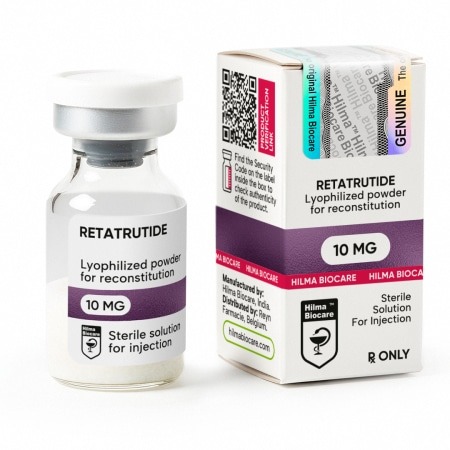
Retatrutide, development code LY3437943, is an investigational peptide acting at GLP-1, GIP and glucagon receptors. Each vial contains 10 mg of retatrutide as lyophilized powder.
The investigational peptide stimulates GLP-1, GIP and glucagon receptors. The incretin pathways influence appetite and glucose dependent insulin release, while glucagon receptor activity affects liver metabolism and energy use. This combination targets both food intake and metabolic regulation.
Appetite Reduction and Weight Loss Research
Human obesity trials show substantial body weight reductions with retatrutide. Appetite reduction is central to its weight management action, while the added glucagon receptor activity distinguishes its metabolic profile. It remains an investigational compound, and physique outcomes in lean trained athletes are not established.
Activating three metabolic hormone receptors.
Reducing body weight in obesity trials.
Targeting appetite and glucose regulation.
Adding glucagon receptor activity to incretin signalling.
Post Cycle Therapy
The investigational peptide has no established role in suppressing the testosterone axis through androgen feedback. Steroid style PCT is not indicated for the compound alone. Changes after stopping concern appetite, metabolic response and weight maintenance rather than a standard testosterone recovery process.
Side Effects
Clinical trials report nausea, vomiting, diarrhoea and other gastrointestinal reactions. Increased heart rate has also been observed. Long duration safety is still being studied, and the full frequency of uncommon complications is not established. Risks from unverified research preparations add uncertainty beyond the clinical trial molecule.